

Get your science and technology news from Africa
Provided by AGP
Ethiopia SOC-as-a-Service Market 2026-2034 | Size, Share, Analysis, Research
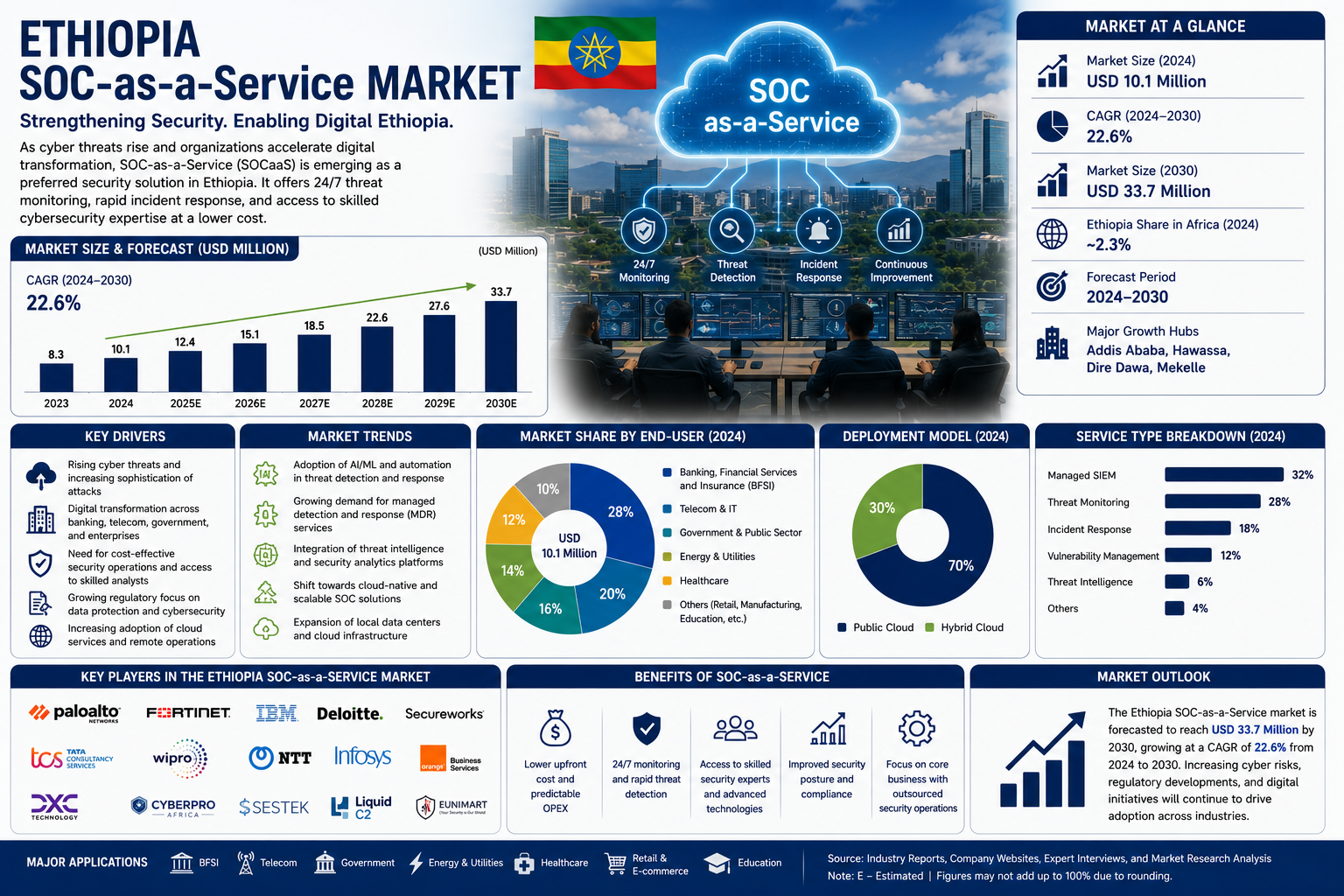
Ethiopia SOC-as-a-Service Market
Ethiopia SOC-as-a-service market size was valued at USD 9.15 Million 2025, is projected to reach USD 24.74 Million 2034, growing at a CAGR of 11.68% 2026-2034.
ETHIOPIA, May 19, 2026 /EINPresswire.com/ --𝗠𝗮𝗿𝗸𝗲𝘁 𝗢𝘃𝗲𝗿𝘃𝗶𝗲𝘄:
The Ethiopia SOC-as-a-service market reached 𝗨𝗦𝗗 𝟵.𝟭𝟱 𝗠𝗶𝗹𝗹𝗶𝗼𝗻 in 2025 and is projected to reach 𝗨𝗦𝗗 𝟮𝟰.𝟳𝟰 𝗠𝗶𝗹𝗹𝗶𝗼𝗻 by 2034, exhibiting a growth rate (𝗖𝗔𝗚𝗥) 𝗼𝗳 𝟭𝟭.𝟲𝟴% 𝗱𝘂𝗿𝗶𝗻𝗴 𝟮𝟬𝟮𝟲–𝟮𝟬𝟯𝟰. The Ethiopia SOC-as-a-service market is expanding rapidly, fueled by the country's accelerating digital transformation under the Digital Ethiopia 2030 strategy, rising cyber threats — with over 50,000 cyberattacks foiled by the Information Network Security Agency in just nine months of the current fiscal year — and a severe cybersecurity talent shortage that is pushing financial institutions, telecom operators, and government agencies toward outsourced security operations. The enactment of the Personal Data Protection Proclamation No. 1321/2024 is compelling organizations across sectors to implement continuous security monitoring and breach notification within 72 hours, while Ethiopian banks are increasing cybersecurity spending by 35% following central bank mandates for quarterly security assessments.
𝗪𝗵𝘆 𝗶𝘀 𝗛𝗼𝘁 𝗧𝗼𝗱𝗮𝘆 𝗘𝘁𝗵𝗶𝗼𝗽𝗶𝗮 𝗦𝗢𝗖-𝗮𝘀-𝗮-𝗦𝗲𝗿𝘃𝗶𝗰𝗲 𝗠𝗮𝗿𝗸𝗲𝘁?
Ethiopia is experiencing more than 11,000 cyberattacks per organization per week — ranking as the most targeted nation in Africa; the Information Network Security Agency successfully thwarted 99% of cyberattacks targeting critical national infrastructure through 24-hour monitoring; the Personal Data Protection Proclamation No. 1321/2024 now requires 72-hour breach notification and comprehensive data governance; the National Bank of Ethiopia launched its National Digital Payment Strategy 2026–2030 alongside a new instant payments platform; Ethio Telecom has reached 97 million mobile subscriptions with 57 million internet users; Safaricom Ethiopia's active customer base grew 54.2% year-on-year to 13.6 million with M-PESA users doubling to 5.2 million; and the government froze 10 payment gateway providers in early 2026 pending financial disclosures, underscoring the urgency of security compliance in the fintech sector.
𝗘𝘁𝗵𝗶𝗼𝗽𝗶𝗮 𝗦𝗢𝗖-𝗮𝘀-𝗮-𝗦𝗲𝗿𝘃𝗶𝗰𝗲 𝗠𝗮𝗿𝗸𝗲𝘁 Summary:
• Ethiopia's digital payments ecosystem is expanding at a remarkable pace, with Ethio Telecom's Telebirr platform serving 52.56 million customers and Safaricom Ethiopia's M-PESA doubling its user base to 5.2 million. The National Bank of Ethiopia launched the National Digital Payment Strategy 2026–2030 alongside a national instant payments system supporting person-to-person transfers, QR payments, bulk disbursements, and selected cross-border transactions. This rapid growth in digital financial transactions is generating enormous volumes of security event data requiring continuous SOC monitoring, real-time fraud detection, and regulatory compliance reporting.
• The Information Network Security Agency is playing a central role in strengthening the country's cyber defense posture, successfully foiling over 50,000 cyberattacks in nine months with a 99% success rate through round-the-clock monitoring. INSA launched the fourth edition of its Cyber Talent Summer Camp in partnership with Addis Ababa Science and Technology University, selecting 784 participants from more than 8,000 applicants to develop homegrown cybersecurity talent. Despite these efforts, the talent gap remains acute, driving enterprises toward outsourced SOC models that provide access to dedicated security analyst teams without the challenge of recruitment and retention.
• The Personal Data Protection Proclamation No. 1321/2024, enacted in July 2024, represents Ethiopia's first comprehensive data protection legislation requiring organizations to implement appropriate technical and organizational security measures, conduct data protection impact assessments for high-risk processing, and notify the Ethiopian Communications Authority of breaches within 72 hours. These regulatory requirements are compelling businesses across banking, telecommunications, and government sectors to adopt SOC-as-a-service solutions with built-in compliance monitoring and automated audit trail capabilities.
• Ethiopia's cloud computing market, valued at USD 918.8 million, is driving significant demand for cloud-native security operations. Ethio Telecom is developing a hyperscale data center in partnership with Shandong Hi-Speed Group, while RailTel Corporation of India secured a USD 2.2 million contract for a government data center at the Ministry of Foreign Affairs. Ethio Telecom also introduced seven advanced cloud-based enterprise solutions in Addis Ababa, accelerating cloud adoption across banking, education, and enterprise sectors — each creating new security monitoring requirements.
• The telecommunications sector liberalization is fundamentally reshaping the security landscape, as Safaricom Ethiopia — operating under a USD 850 million, 15-year license with an USD 8 billion investment commitment — reported service revenue surging 130.9% to ETB 15.9 billion in FY26. The resulting network expansion and digital service growth is increasing the attack surface exponentially, necessitating advanced SOC capabilities for continuous network monitoring, intrusion detection, and incident response across an increasingly complex multi-operator telecommunications environment.
𝗛𝗼𝘄 𝗔𝗜 𝗶𝘀 𝗥𝗲𝘀𝗵𝗮𝗽𝗶𝗻𝗴 𝘁𝗵𝗲 𝗘𝘁𝗵𝗶𝗼𝗽𝗶𝗮 𝗦𝗢𝗖-𝗮𝘀-𝗮-𝗦𝗲𝗿𝘃𝗶𝗰𝗲 𝗠𝗮𝗿𝗸𝗲𝘁:
Artificial intelligence is increasingly transforming the Ethiopia SOC-as-a-service market, enabling service providers to counter a threat landscape where organizations face over 11,000 weekly attacks — with AI-powered behavioral analytics reducing false positive alerts by up to 90%, automated threat correlation engines processing millions of security events in real time, and machine learning models detecting sophisticated attack patterns that traditional rule-based systems miss entirely.
• 𝗔𝗜-𝗗𝗿𝗶𝘃𝗲𝗻 𝗧𝗵𝗿𝗲𝗮𝘁 𝗗𝗲𝘁𝗲𝗰𝘁𝗶𝗼𝗻 𝗮𝗻𝗱 𝗕𝗲𝗵𝗮𝘃𝗶𝗼𝗿𝗮𝗹 𝗔𝗻𝗮𝗹𝘆𝘁𝗶𝗰𝘀: AI-powered SOC platforms are deploying user and entity behavior analytics to establish baseline activity patterns across Ethiopian enterprise networks, automatically flagging anomalous behaviors that indicate potential compromise — from unusual login times and data exfiltration attempts to lateral movement by threat actors. These systems are particularly critical for Ethiopian financial institutions monitoring millions of digital payment transactions through Telebirr and M-PESA, where AI algorithms detect fraudulent patterns that would overwhelm human analysts reviewing security events manually.
• 𝗔𝘂𝘁𝗼𝗺𝗮𝘁𝗲𝗱 𝗜𝗻𝗰𝗶𝗱𝗲𝗻𝘁 𝗥𝗲𝘀𝗽𝗼𝗻𝘀𝗲 𝗮𝗻𝗱 𝗦𝗢𝗔𝗥 𝗜𝗻𝘁𝗲𝗴𝗿𝗮𝘁𝗶𝗼𝗻: Security Orchestration, Automation, and Response platforms integrated with AI are enabling Ethiopian SOC-as-a-service providers to automate routine incident triage, containment, and remediation workflows — resolving common security incidents before human analysts need to intervene. SOC teams are increasingly working alongside AI co-pilots that provide context-aware support for everything from anomaly detection to compliance reporting, significantly improving response times for organizations that must meet the 72-hour breach notification requirement under the data protection proclamation.
• 𝗔𝗜-𝗣𝗼𝘄𝗲𝗿𝗲𝗱 𝗟𝗼𝗴 𝗔𝗻𝗮𝗹𝘆𝘁𝗶𝗰𝘀 𝗮𝗻𝗱 𝗦𝗜𝗘𝗠 𝗘𝗻𝗵𝗮𝗻𝗰𝗲𝗺𝗲𝗻𝘁: AI-enhanced SIEM platforms are processing vast volumes of log data from Ethiopian banking networks, government systems, and telecom infrastructure — using machine learning correlation engines to identify sophisticated multi-stage attack patterns across heterogeneous IT environments. These platforms are reducing alert fatigue by automatically filtering false positives and prioritizing genuine threats, enabling managed SOC teams to focus limited analyst resources on high-severity incidents requiring human investigation.
• 𝗣𝗿𝗲𝗱𝗶𝗰𝘁𝗶𝘃𝗲 𝗧𝗵𝗿𝗲𝗮𝘁 𝗜𝗻𝘁𝗲𝗹𝗹𝗶𝗴𝗲𝗻𝗰𝗲 𝗮𝗻𝗱 𝗩𝘂𝗹𝗻𝗲𝗿𝗮𝗯𝗶𝗹𝗶𝘁𝘆 𝗣𝗿𝗶𝗼𝗿𝗶𝘁𝗶𝘇𝗮𝘁𝗶𝗼𝗻: AI-driven threat intelligence platforms are analyzing global attack trends and mapping them against Ethiopian organizational vulnerabilities to predict likely attack vectors before they materialize. These systems prioritize vulnerability remediation based on exploitability and business impact, helping organizations allocate limited security resources effectively across an expanding digital infrastructure.
• 𝗔𝗜-𝗘𝗻𝗵𝗮𝗻𝗰𝗲𝗱 𝗖𝗼𝗺𝗽𝗹𝗶𝗮𝗻𝗰𝗲 𝗠𝗼𝗻𝗶𝘁𝗼𝗿𝗶𝗻𝗴: AI systems are automating regulatory compliance tracking for Ethiopian organizations navigating the requirements of the Personal Data Protection Proclamation, National Bank directives, and sector-specific cybersecurity guidelines. Machine learning algorithms continuously map security events against compliance frameworks, generating automated audit reports and flagging potential violations in real time — reducing the manual effort required to maintain continuous compliance.
𝗥𝗲𝗾𝘂𝗲𝘀𝘁 𝗳𝗼𝗿 𝗮 𝘀𝗮𝗺𝗽𝗹𝗲 𝗿𝗲𝗽𝗼𝗿𝘁 𝗣𝗗𝗙: https://www.imarcgroup.com/ethiopia-soc-as-a-service-market/requestsample
𝗠𝗮𝗿𝗸𝗲𝘁 𝗧𝗿𝗲𝗻𝗱𝘀 𝗮𝗻𝗱 𝗜𝗻𝘀𝗶𝗴𝗵𝘁𝘀:
• The Digital Ethiopia 2030 strategy, launched in December 2025 by Prime Minister Abiy Ahmed, is targeting 128 million mobile subscribers and nationwide 5G coverage while positioning cybersecurity as a core pillar — including building resilient critical digital infrastructure, establishing a disaster response center, and strengthening private-sector cybersecurity collaboration. This government-led digital expansion is creating an exponentially larger attack surface that demands continuous managed security monitoring.
• The financial sector's digital transformation is emerging as a major demand driver, with the National Digital Payment Strategy 2026–2030 establishing a national instant payments system and the Ministry of Justice freezing 10 payment gateway providers pending exhaustive financial disclosures in early 2026. Ethiopian banks have increased cybersecurity spending by 35% following central bank guidelines mandating quarterly security assessments, creating strong demand for managed SIEM and compliance-focused SOC services.
• Ethiopia's establishment of the National Cyber Security Agency and adoption of the National Cybersecurity Policy Framework are institutionalizing cyber defense at the national level, with INSA implementing Critical Mass Cybersecurity Standards and developing homegrown cybersecurity products including secure messaging platforms, video conferencing solutions, and email systems. These government-led initiatives are creating a structured regulatory environment that incentivizes enterprise adoption of managed security operations.
• The cloud computing market, valued at USD 918.8 million and growing at 21.88% annually, is driving demand for cloud-native SOC capabilities as organizations migrate workloads to hybrid environments. Ethio Telecom's launch of seven advanced cloud-based enterprise solutions and development of a hyperscale data center is expanding the cloud infrastructure requiring security monitoring, while international funding commitments exceeding USD 4 billion from the New Development Bank, World Bank, and Africa50 are accelerating digital infrastructure build-out.
• Telecom sector liberalization is intensifying the security landscape, with Safaricom Ethiopia's 54.2% subscriber growth and Ethio Telecom's 97 million mobile subscriptions creating a vast multi-operator network environment. The convergence of mobile money services, enterprise connectivity, and 5G rollout is generating complex security monitoring requirements that exceed the capabilities of most organizations' internal teams, driving adoption of outsourced SOC models.
• AI-powered cyberattacks are surging across Africa, with synthetic identity fraud nearly tripling and nation-states adopting AI throughout their operations. Ethiopia's position as the continent's most targeted nation — experiencing over 11,000 attacks per organization weekly — is compelling organizations to adopt AI-enhanced SOC-as-a-service solutions capable of matching the sophistication and speed of these emerging threats.
𝗠𝗮𝗿𝗸𝗲𝘁 𝗚𝗿𝗼𝘄𝘁𝗵 𝗗𝗿𝗶𝘃𝗲𝗿𝘀:
𝗔𝗰𝗰𝗲𝗹𝗲𝗿𝗮𝘁𝗶𝗻𝗴 𝗗𝗶𝗴𝗶𝘁𝗮𝗹 𝗧𝗿𝗮𝗻𝘀𝗳𝗼𝗿𝗺𝗮𝘁𝗶𝗼𝗻 𝗮𝗻𝗱 𝗘𝘅𝗽𝗮𝗻𝗱𝗶𝗻𝗴 𝗧𝗵𝗿𝗲𝗮𝘁 𝗦𝘂𝗿𝗳𝗮𝗰𝗲
Ethiopia's rapid digital transformation under the Digital Ethiopia 2030 strategy is fundamentally expanding the nation's cyber threat surface, making outsourced security operations essential. With Ethio Telecom serving 97 million mobile subscribers and 57 million internet users, Safaricom Ethiopia growing its active base to 13.6 million, and digital payment platforms processing millions of transactions daily through Telebirr and M-PESA, the volume and complexity of security events requiring continuous monitoring are growing exponentially. The planned expansion to 128 million mobile subscribers and nationwide 5G coverage will further amplify the need for managed SOC services capable of providing real-time threat detection across an increasingly connected digital ecosystem.
𝗦𝗲𝘃𝗲𝗿𝗲 𝗖𝘆𝗯𝗲𝗿𝘀𝗲𝗰𝘂𝗿𝗶𝘁𝘆 𝗧𝗮𝗹𝗲𝗻𝘁 𝗦𝗵𝗼𝗿𝘁𝗮𝗴𝗲 𝗮𝗻𝗱 𝗢𝘂𝘁𝘀𝗼𝘂𝗿𝗰𝗶𝗻𝗴 𝗗𝗲𝗺𝗮𝗻𝗱
The acute shortage of qualified cybersecurity professionals is one of the most significant structural drivers for SOC-as-a-service adoption in Ethiopia. Despite INSA's efforts — including the Cyber Talent Summer Camp training 784 participants from over 8,000 applicants — the talent gap remains far too wide for internal hiring alone to address. Organizations across banking, government, and telecommunications are unable to recruit, train, and retain skilled security analysts at the pace required to defend against over 11,000 weekly attacks per organization. This workforce constraint is compelling enterprises to engage managed SOC providers who maintain dedicated analyst teams delivering continuous monitoring, investigation, and incident response services.
𝗘𝘃𝗼𝗹𝘃𝗶𝗻𝗴 𝗥𝗲𝗴𝘂𝗹𝗮𝘁𝗼𝗿𝘆 𝗟𝗮𝗻𝗱𝘀𝗰𝗮𝗽𝗲 𝗮𝗻𝗱 𝗖𝗼𝗺𝗽𝗹𝗶𝗮𝗻𝗰𝗲 𝗥𝗲𝗾𝘂𝗶𝗿𝗲𝗺𝗲𝗻𝘁𝘀
The convergence of Ethiopia's Personal Data Protection Proclamation No. 1321/2024, National Bank cybersecurity directives, and the establishment of the National Cyber Security Agency is creating a comprehensive regulatory environment that mandates continuous security monitoring. The data protection law requires 72-hour breach notification, data protection impact assessments, and registration with the Ethiopian Communications Authority, while banking regulations mandate quarterly security assessments. These layered compliance requirements are driving organizations across sectors to adopt SOC-as-a-service solutions with integrated compliance monitoring, automated audit trails, and regulatory reporting capabilities.
𝗠𝗮𝗿𝗸𝗲𝘁 𝗦𝗲𝗴𝗺𝗲𝗻𝘁𝗮𝘁𝗶𝗼𝗻:
IMARC Group's research categorizes the Ethiopia SOC-as-a-service market as follows:
𝗕𝘆 𝗦𝗲𝗿𝘃𝗶𝗰𝗲 𝗧𝘆𝗽𝗲:
• Managed SIEM and Log Management
• Vulnerability Scanning and Assessment
• Threat Detection and Remediation
𝗕𝘆 𝗦𝗲𝗰𝘂𝗿𝗶𝘁𝘆 𝗧𝘆𝗽𝗲:
• Endpoint Security
• Network Security
• Cloud Security
𝗕𝘆 𝗥𝗲𝗴𝗶𝗼𝗻:
• Addis Ababa
• Oromia Region
• Amhara Region
• SNNPR Region
• Tigray Region
• Others
𝗞𝗲𝘆 𝗣𝗹𝗮𝘆𝗲𝗿𝘀:
The competitive landscape of the Ethiopia SOC-as-a-service market features a developing ecosystem characterized by a mix of domestic telecom-affiliated service providers, emerging local cybersecurity firms, and international managed security service providers establishing regional presence to serve the country's growing enterprise security requirements. Detailed profiles of all major companies are provided within the full IMARC Group research report.
𝗥𝗲𝗰𝗲𝗻𝘁 𝗡𝗲𝘄𝘀 𝗮𝗻𝗱 𝗗𝗲𝘃𝗲𝗹𝗼𝗽𝗺𝗲𝗻𝘁𝘀:
𝗗𝗲𝗰𝗲𝗺𝗯𝗲𝗿 𝟮𝟬𝟮𝟱: Ethiopia officially launched the Digital Ethiopia 2030 Strategy, with Prime Minister Abiy Ahmed presiding over the launch. The five-year strategy targets expanding mobile subscribers to 128 million and achieving nationwide 5G coverage, with strengthened cybersecurity designated as a core strategic pillar.
𝗔𝘂𝗴𝘂𝘀𝘁 𝟮𝟬𝟮𝟱: The Information Network Security Agency launched the fourth edition of its Cyber Talent Summer Camp in partnership with Addis Ababa Science and Technology University, selecting 784 participants from over 8,000 applicants to build homegrown cybersecurity expertise and address the national talent shortage.
𝗝𝘂𝗹𝘆 𝟮𝟬𝟮𝟰: Ethiopia enacted the Personal Data Protection Proclamation No. 1321/2024, the country's first comprehensive data protection legislation requiring 72-hour breach notification, data protection impact assessments, and registration with the Ethiopian Communications Authority for all data controllers and processors.
𝗝𝗮𝗻𝘂𝗮𝗿𝘆 𝟮𝟬𝟮𝟲: Ethiopia's Ministry of Justice ordered all commercial banks to freeze accounts of 10 payment gateway providers and submit exhaustive financial disclosures, underscoring the growing regulatory scrutiny of fintech security and compliance in the digital payments ecosystem.
𝗠𝗮𝗿𝗰𝗵 𝟮𝟬𝟮𝟱: The National Bank of Ethiopia launched Phase Two of its National Digital Payment Strategy alongside a national instant payments platform supporting person-to-person transfers, QR payments, and bulk disbursements, expanding cloud infrastructure requirements and security monitoring needs across the financial sector.
𝗠𝗮𝘆 𝟮𝟬𝟮𝟱: The Ethiopian Tech Expo 2025 held in Addis Ababa attracted over 10,000 stakeholders and showcased advancements in cybersecurity, AI, and smart city technologies, highlighting the capital's position as the hub for digital innovation and security infrastructure development.
𝗕𝗿𝗼𝘄𝘀𝗲 𝘁𝗵𝗲 𝗳𝘂𝗹𝗹 𝗿𝗲𝗽𝗼𝗿𝘁 𝘄𝗶𝘁𝗵 𝗧𝗢𝗖 𝗮𝗻𝗱 𝗹𝗶𝘀𝘁 𝗼𝗳 𝗳𝗶𝗴𝘂𝗿𝗲𝘀: https://www.imarcgroup.com/ethiopia-soc-as-a-service-market
𝗡𝗼𝘁𝗲: 𝗜𝗳 𝘆𝗼𝘂 𝗿𝗲𝗾𝘂𝗶𝗿𝗲 𝗮𝗻𝘆 𝘀𝗽𝗲𝗰𝗶𝗳𝗶𝗰 𝗶𝗻𝗳𝗼𝗿𝗺𝗮𝘁𝗶𝗼𝗻 𝘁𝗵𝗮𝘁 𝗶𝘀 𝗻𝗼𝘁 𝗰𝗼𝘃𝗲𝗿𝗲𝗱 𝗰𝘂𝗿𝗿𝗲𝗻𝘁𝗹𝘆 𝘄𝗶𝘁𝗵𝗶𝗻 𝘁𝗵𝗲 𝘀𝗰𝗼𝗽𝗲 𝗼𝗳 𝘁𝗵𝗲 𝗿𝗲𝗽𝗼𝗿𝘁, 𝘄𝗲 𝘄𝗶𝗹𝗹 𝗽𝗿𝗼𝘃𝗶𝗱𝗲 𝘁𝗵𝗲 𝘀𝗮𝗺𝗲 𝗮𝘀 𝗮 𝗽𝗮𝗿𝘁 𝗼𝗳 𝘁𝗵𝗲 𝗰𝘂𝘀𝘁𝗼𝗺𝗶𝘇𝗮𝘁𝗶𝗼𝗻.
Other Report by IMARC Group:
Ethiopia Telecom Market 2026: https://www.imarcgroup.com/ethiopia-telecom-market
Ethiopia 5g Services Market 2026: https://www.imarcgroup.com/ethiopia-5g-services-market
Ethiopia Telecommunication Towers Market 2026: https://www.imarcgroup.com/ethiopia-telecommunication-towers-market
Ethiopia Cement Market 2026: https://www.imarcgroup.com/ethiopia-cement-market
Ethiopia Packaged Meat Products Market 2026: https://www.imarcgroup.com/ethiopia-packaged-meat-products-market
𝗔𝗯𝗼𝘂𝘁 𝗨𝘀
IMARC Group is a global management consulting firm that helps the world's most ambitious changemakers to create a lasting impact. The company provides a comprehensive suite of market entry and expansion services including thorough market assessment, feasibility studies, company incorporation assistance, factory setup support, regulatory approvals and licensing navigation, branding, marketing and sales strategies, competitive landscape and benchmarking analyses, pricing and cost research, and procurement research.
𝗖𝗼𝗻𝘁𝗮𝗰𝘁 𝗨𝘀
𝗜𝗠𝗔𝗥𝗖 𝗚𝗿𝗼𝘂𝗽
134 N 4th St., Brooklyn, NY 11249, USA
𝗘𝗺𝗮𝗶𝗹: sales@imarcgroup.com
𝗧𝗲𝗹. 𝗡𝗼.: (D) +91 120 433 0800
𝗨𝗻𝗶𝘁𝗲𝗱 𝗦𝘁𝗮𝘁𝗲𝘀: +1-201-971-6302
Elena Anderson
IMARC Services Private Limited
+1 201-971-6302
email us here
Legal Disclaimer:
EIN Presswire provides this news content "as is" without warranty of any kind. We do not accept any responsibility or liability for the accuracy, content, images, videos, licenses, completeness, legality, or reliability of the information contained in this article. If you have any complaints or copyright issues related to this article, kindly contact the author above.
